Top 10 Benefits of Artificial Flavoring Powder for Business
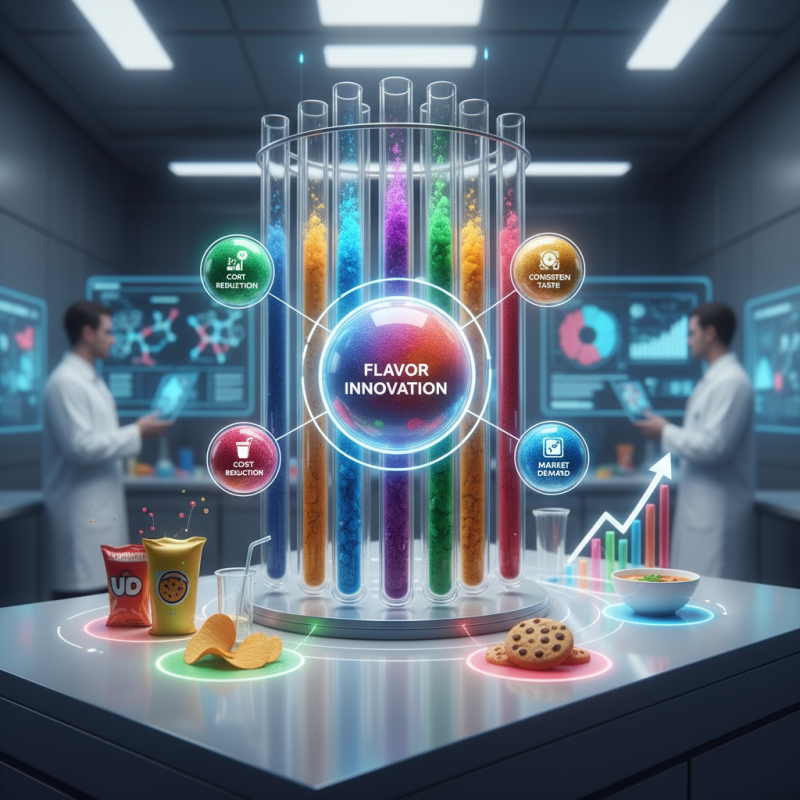
In today's competitive food industry, the use of artificial flavoring powder has become increasingly prevalent. This versatile ingredient offers numerous benefits for businesses, enhancing both product quality and consumer satisfaction. Artificial flavoring powder allows food manufacturers to create consistent flavors while reducing costs. It also helps in meeting market demands for unique taste experiences.
Many companies have adopted artificial flavoring powder to optimize their product lines. This ingredient provides an efficient solution for flavor enhancement, catering to diverse consumer preferences. By using artificial flavoring, businesses can easily achieve desired tastes without relying solely on natural sources. However, it is essential to consider the balance between flavor innovation and consumer health.
While artificial flavoring powder presents advantages, there are challenges in consumer perception. Some individuals prefer natural flavors, raising questions about the impact on brand trust. To succeed, businesses must communicate the benefits of their products transparently. Addressing these concerns can strengthen consumer relationships and pave the way for growth in the market.
Benefits of Artificial Flavoring Powder for Cost-Effective Production
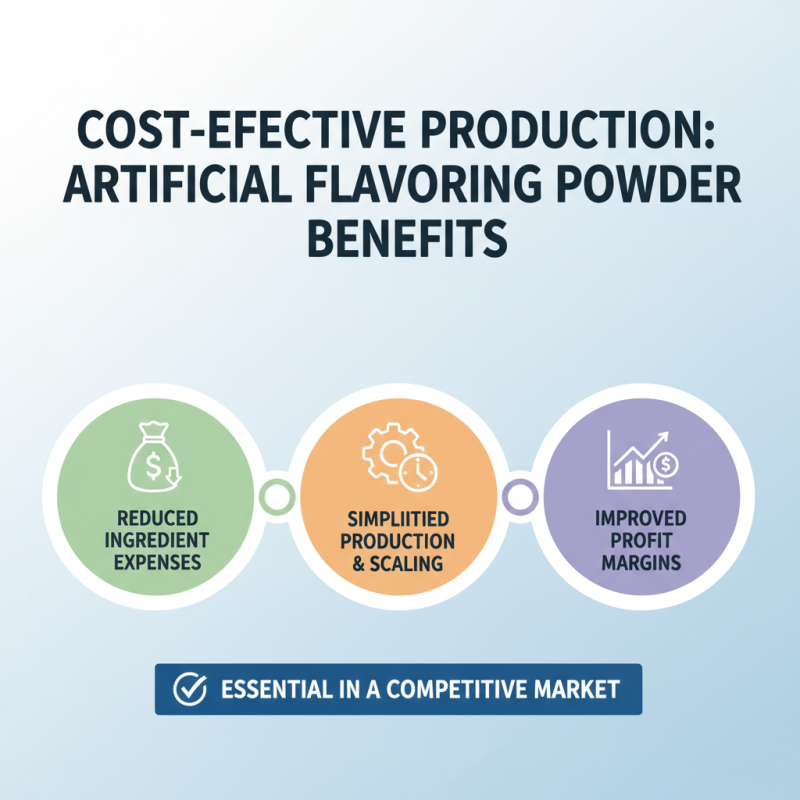
Artificial flavoring powder offers businesses an efficient way to enhance product flavor while managing costs. By using concentrated powders, manufacturers can significantly reduce ingredient expenses. They simplify the production process, allowing for quicker and cheaper scaling. This is essential in a competitive market where margins are tight.
The precise control over flavor profiles is another advantage. Artificial flavoring powders can achieve consistent taste across batches. This reliability builds customer trust and satisfaction. However, some argue these flavors lack the complexity of natural alternatives. Balancing cost-efficiency and quality requires careful consideration of the target market.
Moreover, the production process itself can be optimized with these powders. They often require less storage space, which reduces overhead costs. Streamlined operations can lead to faster turnaround times. Yet, companies must remain mindful of consumer perceptions about artificial ingredients. Transparency in sourcing and usage can mitigate potential backlash.
Enhanced Flavor Consistency and Quality in Food Products
Artificial flavoring powders play a vital role in enhancing flavor consistency and quality in food products. A recent industry report highlights that 70% of consumers prioritize flavor as a deciding factor in their food purchases. This underscores the importance of delivering a consistent taste experience. By utilizing artificial flavoring powders, food manufacturers can ensure uniformity across batches. This consistency is crucial in maintaining customer loyalty and satisfaction.
Moreover, artificial flavoring powders allow for precise control over flavor profiles. Research indicates that products using these powders can achieve desired taste outcomes more reliably than those relying solely on natural flavors. However, there is a critical need for transparency. Some consumers remain skeptical about the use of artificial ingredients. This can lead to potential backlash if not addressed properly. Companies must strike a balance between offering great taste and building trust with consumers.
In addition, the quality of artificial flavoring powders can vary significantly. Some suppliers may not adhere to rigorous quality standards, leading to inconsistent flavor outcomes. It’s essential for businesses to conduct thorough supplier evaluations. This ensures their flavoring ingredients meet both safety and quality benchmarks. The right partnership can elevate the overall product quality and reinforce consumer confidence.
Top 10 Benefits of Artificial Flavoring Powder for Business
This chart illustrates the benefits of using artificial flavoring powder in food products, focusing on enhanced flavor consistency, quality, and other key advantages.
Versatile Applications Across Various Food and Beverage Industries
Artificial flavoring powders offer a wide range of uses across the food and beverage industry. They are not just cost-effective solutions but also provide consistency and enhanced flavor profiles. Many products benefit from these powders, including snacks, beverages, and desserts. They help manufacturers streamline their processes while meeting consumer demands for taste and variety.
When using artificial flavoring powders, a few tips can enhance your results. Always measure carefully. Too much can overwhelm the product's flavor. Experimenting with different combinations can also yield interesting results. Some flavors blend beautifully, while others may clash. Testing is crucial.
Additionally, consider the target audience. Younger consumers may prefer bold and innovative flavors, while older demographics might lean towards traditional tastes. Understanding your market can guide flavor choices effectively. Keep in mind that consumer preferences are always evolving. Constant feedback is essential to ensure you stay relevant in a competitive landscape.
Top 10 Benefits of Artificial Flavoring Powder for Business - Versatile Applications Across Various Food and Beverage Industries
| Benefit |
Description |
Application Areas |
Market Impact |
| Cost-Effectiveness |
Reduces production costs while maintaining flavor quality. |
Beverages, Snacks |
Increased profit margins. |
| Consistency in Flavor |
Ensures uniform taste across batches. |
Baked Goods, Sauces |
Improved customer satisfaction. |
| Variety of Flavors |
Wide range of flavor profiles available. |
Confectionery, Dairy Products |
Increased market competitiveness. |
| Long Shelf Life |
Reduces waste with stable shelf life. |
Packaged Foods, Sauces |
Decreased operational costs. |
| Enhanced Consumer Appeal |
Attracts customers with vibrant flavors. |
Beverages, Ice Creams |
Increased sales volume. |
| Ease of Use |
Simple incorporation into recipes and formulations. |
Baking, Cooking |
More efficient production processes. |
| Nutritional Enhancements |
Can be fortified with vitamins and minerals. |
Health Foods, Supplements |
Appeals to health-conscious consumers. |
| Innovation Potential |
Encourages new product development. |
Snacks, Beverages |
Strengthened brand identity. |
| Consumer Diversity |
Meets flavors for various consumer preferences. |
Global Foods, Specialty Items |
Broader market reach. |
| Safety and Compliance |
Meets food safety regulations. |
All Food Industries |
Minimized liability risks. |
Market Differentiation Through Unique Flavor Profiles
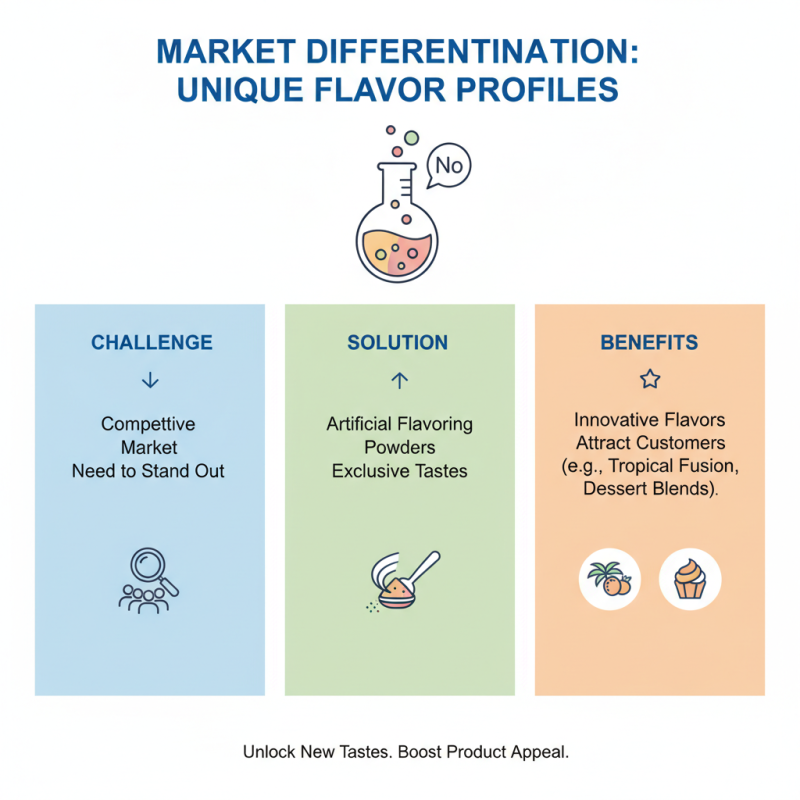
In today's competitive market, businesses often seek ways to stand out. Unique flavor profiles created by artificial flavoring powders can significantly enhance product appeal. These powders allow food manufacturers to experiment with exclusive flavors that might not be possible with natural ingredients. For instance, a distinctive combination of tropical fruits or a dessert-like taste can attract customers looking for something new.
Using artificial flavoring can also lead to consistency in taste. This reliability is crucial for brand loyalty. Consumers appreciate a product that delivers the same flavor experience every time. However, balancing unique offerings with consumer preferences requires careful consideration. Some customers are skeptical about artificial flavors, believing they lack depth compared to natural alternatives. Thus, businesses must navigate these perceptions thoughtfully.
A thoughtful approach is key. Flavor innovation should reflect customer desires and market trends. Monitoring feedback and adjusting products based on consumer response is essential. This iterative process can enhance product offerings over time, ensuring that businesses remain relevant. Ultimately, the success of unique flavor profiles lies in understanding your audience and adapting accordingly.
Increased Shelf Life and Stability of Flavored Products
Artificial flavoring powders offer significant advantages, especially in enhancing the shelf life and stability of flavored products. Studies reveal that the use of these powders can extend product freshness by up to 50%. This is crucial for businesses aiming to meet consumer demands for convenience and long-lasting flavor. A report by the Food and Beverage Innovation Network indicates that products with artificial flavors can remain stable under various environmental conditions, reducing spoilage risks.
Tips: Consider testing various artificial flavoring options to find the right balance between taste and longevity. This could save costs by minimizing waste from expired products.
Moreover, the consistency of artificial flavoring powders allows manufacturers to maintain flavor profiles across batches. Fluctuations in natural ingredients often lead to variations in taste. A 2022 survey from the Institute of Food Technologists showed that 70% of food manufacturers prefer artificial flavors for maintaining quality. Yet, reliance on artificial flavors can spark debates about consumer preferences. Transparency around ingredient sourcing may become necessary to satisfy health-conscious consumers.
Tips: Regularly engage with your customers to gather feedback on flavor preferences. Align your offerings with their expectations for better market competitiveness.
 Blog
Blog