2026 Best Granular Seaweed Fertiliser for Global Buyers

Choosing the 2026 best Granular Seaweed Fertiliser requires more than comparing prices or attractive packaging. Global buyers need dependable evidence, consistent manufacturing, and clear agricultural value. In commercial sourcing, small details often decide performance. Granule size affects spreading accuracy. Moisture content influences storage stability. Seaweed species, harvest location, extraction method, and nutrient analysis also matter. These factors should appear clearly on the technical datasheet.

Look beyond marketing language. A reliable supplier should provide batch-specific certificates of analysis, traceability records, and testing for heavy metals, pathogens, and unwanted residues. Buyers should also confirm NPK values, organic matter, alginate content, application rates, and compatibility with local farming systems. Certification requirements vary between markets, so exporters must check destination-country rules before shipment. Compliance is not a decorative label.

Field experience remains valuable. A granular product that performs well on sandy soil may respond differently in clay or drought conditions. Small demonstration plots can reveal spreading behavior, crop response, and visible stress. Results should be measured against untreated controls, not assumptions. Some supplier claims still sound broader than the available evidence. That deserves careful questioning.

Packaging needs practical attention. Moisture-resistant bags, pallet strength, and readable batch markings protect product quality during long-distance transport. Buyers should request samples before committing to container volumes. The best choice is rarely the cheapest one. It is the product supported by transparent data, responsible production, and repeatable field performance. Mistakes happen, even with experienced teams. A careful review reduces costly surprises.
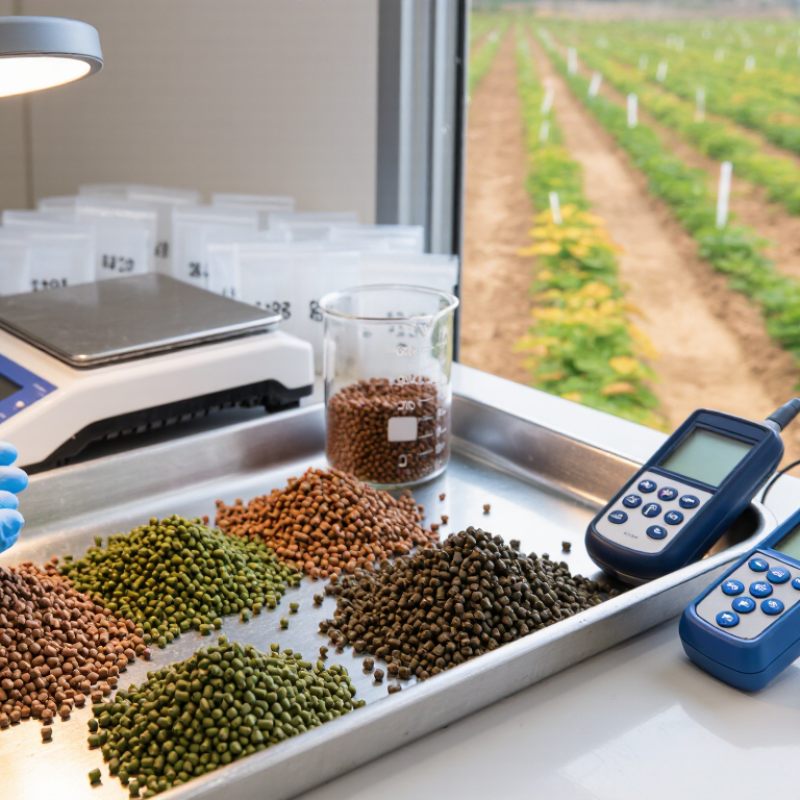
2026 Best Granular Seaweed Fertiliser for Global Buyers

What Granular Seaweed Fertiliser Is and How It Works

Granular seaweed fertiliser is a dry soil amendment made from processed marine algae. Manufacturers remove excess water, concentrate useful organic compounds, and form the material into small, easy-to-spread granules. These granules may contain alginate, trace minerals, natural carbohydrates, and other plant-supporting compounds. Nutrient levels vary, so buyers should check laboratory specifications instead of trusting broad marketing claims.

In soil, moisture softens the granules and releases their soluble components. Seaweed extracts may support root activity, microbial life, and the plant’s response to drought or transplant stress. This is not a complete replacement for nitrogen, phosphorus, or potassium. It works better as a supplement within a tested fertility plan. Field observations often show stronger effects in poor soils, but results can change with crop type, climate, dosage, and application timing. It can disappoint when used excessively.

Tips: Select uniform granules with low dust and clear nutrient data. Check the recommended application rate for each crop. Apply near the root zone, then irrigate lightly. Store the product in a dry, sealed place. Do not assume a darker colour means higher quality. A soil test remains useful. Some farms may need more evidence before expanding use.

Key Nutrients, Bioactive Compounds, and Soil Benefits

2026 Best Granular Seaweed Fertiliser for Global Buyers

Key Nutrients, Bioactive Compounds, and Soil Benefits

Granular seaweed fertiliser offers a practical way to apply marine-derived nutrients across large fields. Its nutrient profile depends on seaweed species, harvest season, and processing method. Most products provide modest potassium, small amounts of nitrogen, and useful trace elements. Calcium, magnesium, iron, and manganese may also appear, but levels require laboratory verification.

The more distinctive value comes from bioactive compounds. Alginates can support moisture retention and improve soil aggregation. Mannitol, betaines, phenolic compounds, and seaweed oligosaccharides may help plants respond to drought, salinity, or transplant stress. Evidence varies between crops and climates. It is not magic. Field performance can change sharply in sandy soil, cool weather, or poorly drained beds.

Granules should dissolve evenly without excessive dust or hard caking. Buyers should request a current certificate of analysis, contaminant testing, origin records, and clear application guidance. Heavy metals, salts, moisture, particle size, and microbial safety deserve attention before shipment. Local fertiliser registration may also be required. That detail is easy to overlook.

For soil improvement, repeated low-rate applications may encourage better structure and biological activity. However, seaweed fertiliser cannot replace a complete nutrient plan or mature compost where organic matter is deficient. Independent plot trials remain valuable, especially when comparing root growth, leaf colour, water use, and yield. The picture is not perfect. Results need local proof.

2026 Best Granular Seaweed Fertiliser for Global Buyers

This chart presents typical literature-reported concentration ranges for dried brown seaweed-based fertiliser materials. Nutrient values are expressed as fertiliser-analysis equivalents, while bioactive compounds are shown as percentages of dry matter.

Seaweed-derived organic matter can support soil aggregation and moisture retention. Alginates may improve soil structure, while mannitol, laminarin, and naturally occurring polyphenols are associated with microbial activity and plant stress-response support. Actual values vary by seaweed species, harvest season, processing method, and granulation.

How to Compare Granular Seaweed Fertilisers for Global Markets

For global buyers, comparing granular seaweed fertilisers requires more than reading the guaranteed analysis. Start with the seaweed source, extraction method, granule size, moisture, and declared active compounds. A low moisture level usually improves storage, but it can also indicate intensive drying. That trade-off deserves questions. Ask for recent batch records, not only a polished product sheet. A dependable supplier should provide a certificate of analysis, safety data, and traceable production details.

Performance depends on crop, soil, climate, and application equipment. Test granules in a small local plot before committing to container-scale purchasing. Measure emergence, root development, leaf colour, yield response, and spreading consistency. Use untreated controls. Granules that flow well through one machine may bridge inside another hopper. Field experience matters here; laboratory solubility cannot fully predict handling under humid conditions. I have found that visible results may vary between seasons, even with identical batches. That makes repeat trials important.

For international procurement, compare packaging strength, pallet stability, shelf life, and transport sensitivity. Request clear information about recommended rates, storage temperatures, and country-specific registration requirements. Do not compare prices per tonne alone. Calculate cost per treated hectare and include losses from dust, breakage, or poor dispersion. Independent testing can expose inconsistent nutrient values or unwanted contaminants before arrival. No supplier is perfect. Even experienced buyers should record failed trials and revise their specifications. This discipline supports safer, more consistent decisions across global markets.

Application Methods, Crop Suitability, and Recommended Dosage

2026 Best Granular Seaweed Fertiliser for Global Buyers

Granular seaweed fertiliser works best when applied near active roots. Broadcast it evenly before planting, then incorporate it into the top 5–10 centimetres of soil. For established crops, place granules beside the row and water thoroughly. Avoid piling granules against stems.

For field vegetables, cereals, maize, and oilseed crops, a practical starting rate is 150–300 kg per hectare. Use 20–40 grams per square metre for garden beds and greenhouse vegetables. Fruit trees may need 100–300 grams per young tree, depending on canopy size and soil fertility. These are starting ranges, not universal rules.

Granule concentration varies widely, so buyers should check the product analysis and local registration requirements. Leafy vegetables usually respond well to moderate applications. Root crops need careful placement to prevent uneven root development. Legumes may require less, especially in fertile soils. Results can be inconsistent.

Tips:

Test a small plot first. Measure soil moisture before application. Reduce the rate on sandy soils if rainfall is heavy, because nutrients may move below the root zone. Do not assume a stronger dose gives faster growth. In practice, excessive granules can waste money and disturb nutrient balance. Record crop response after two or three weeks, then adjust the next application carefully.

Quality Standards, Certifications, Packaging, and Import Considerations

Granular seaweed fertiliser should be evaluated through verified specifications, not attractive claims.

FAO’s 2024 State of World Fisheries and Aquaculture reported 36.8 million tonnes of algae production in 2022. This large supply does not guarantee uniform fertiliser quality. Buyers should request batch results for moisture, particle size, organic matter, potassium, alginate content, and soluble salts. Heavy metals require separate testing, especially arsenic, cadmium, lead, and mercury. A certificate of analysis should show laboratory methods, sampling dates, and lot numbers. Short documents are better.

Certification must match the destination market.

ISO 9001 supports documented quality control, while ISO 14001 indicates an environmental management system. Neither certificate proves product performance. Under Regulation (EU) 2019/1009, products sold as EU fertilising products need applicable conformity assessment and declared safety requirements. Organic claims require approval under the importing market’s rules. Requirements differ. USDA, European, and Asian systems may not accept identical evidence.

Packaging protects quality during long ocean transport. Moisture-barrier inner liners, sealed woven bags, and clear lot coding are practical safeguards. Common commercial sizes include 20 kg and 25 kg bags, while palletized bulk packaging may reduce handling costs. Importers should verify HS classification, phytosanitary expectations, customs documents, and destination-specific contaminant limits before shipment. The FAO data shows the scale of the raw-material sector, but traceability remains uneven. A perfect-looking bag can still hide inconsistent granulation. Insist on pre-shipment samples, retained samples, and independent testing.

Partners in
Sustainability

Learn More
National Forest Foundation
Upcycled Food