
What Is Bulk Matcha Powder and How Is It Used?

Bulk Matcha Powder is finely ground green tea sold in larger quantities for cafés, bakeries, retailers, and home kitchens. Unlike ordinary tea leaves, matcha is consumed whole after mixing with water or another liquid. Its vivid green color, grassy aroma, and gentle bitterness make it easy to recognize. However, quality varies widely between suppliers, harvests, and storage conditions.

Professional users often choose bulk formats to support consistent recipes and lower packaging costs. A café may blend the powder into lattes, smoothies, and iced drinks. A baker may add it to cookies, cakes, ice cream, or savory sauces. For a smoother drink, sift the powder before whisking it with warm water. Boiling water can produce a harsher flavor. Small details matter.

Reliable purchasing requires more than checking price. Buyers should review the origin, harvest information, ingredient list, particle texture, and laboratory or quality documentation when available. Culinary-grade matcha suits recipes, while higher grades may offer a cleaner finish for drinking. Yet these labels are not perfectly standardized. Taste remains important.

Store the powder in an airtight, light-resistant container. Keep it cool and dry. Fresh matcha usually smells sweet, vegetal, and lively. A dull color or stale aroma may signal age or poor storage. This guide explains how Bulk Matcha Powder works, where it fits in modern food preparation, and how practical buyers can judge its value without trusting marketing claims alone.
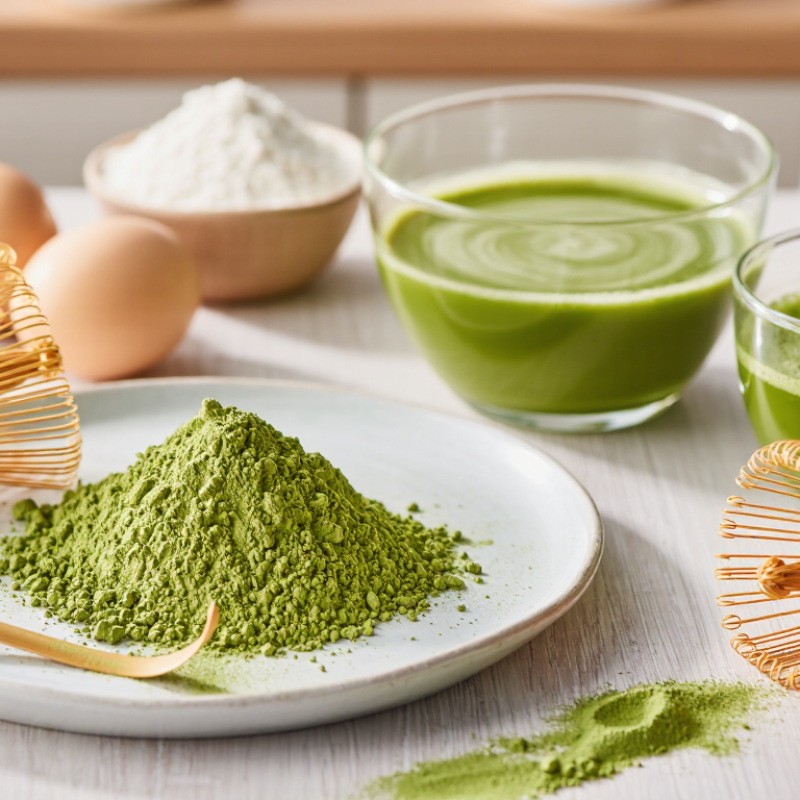
What Is Bulk Matcha Powder and How Is It Used?

What Is Bulk Matcha? Grades, Origins, and Commercial Specifications

What Is Bulk Matcha Powder and How Is It Used?

Bulk matcha is finely milled green tea powder sold in larger quantities for cafés, bakeries, beverage manufacturers, and food-service kitchens. It is not a single quality grade. The term usually describes volume, packaging, and purchasing conditions. Market estimates show strong demand: Grand View Research valued the global matcha market at about US$2.3 billion in 2023 and projected continued growth through 2030. However, estimates differ because companies define matcha categories differently.

Grade labels need careful reading. Ceremonial, premium, and culinary are commercial terms, not universally regulated standards. Higher-quality powder often has brighter green color, finer texture, fresh vegetal aroma, and less bitterness. Culinary matcha may taste stronger and work better in lattes, noodles, cakes, and ice cream.

Origin also matters. Japan is known for shaded tea cultivation and stone-milled production, while China supplies substantial volumes for industrial use. Growing region, cultivar, harvest season, shading period, and milling method can change the cup dramatically. It is not simply about country.

Commercial buyers should request a certificate of analysis. Useful specifications include particle size, moisture, microbial limits, pesticide screening, heavy-metal results, and packaging date. Food manufacturers may also require allergen statements and traceability records. The International Tea Committee reports continued expansion in global tea production, supporting wider ingredient supply, but supply does not guarantee consistency. A green powder can still taste flat. Storage matters too: sealed, light-resistant packaging and cool conditions help protect color and aroma. Some purchasing teams focus too heavily on price. That can be a costly mistake.

How Matcha Is Produced: 20–30 Days of Shading and Stone-Milling

What Is Bulk Matcha Powder and How Is It Used?

Matcha begins as tencha, not ordinary dried green tea. Growers shade tea plants for about 20–30 days before harvesting. This reduces direct sunlight and encourages deeper green color, softer bitterness, and higher umami. The leaves are steamed, cooled, dried without rolling, and stripped of stems and veins. Only then are they ready for milling.

The final step is deliberately slow. Granite mills grind tencha into an exceptionally fine powder, often producing only a small amount per hour. The powder feels silky between the fingers. It also settles quickly in water.

Japan’s Ministry of Agriculture, Forestry and Fisheries reported approximately 77,000 tonnes of total tea production in 2023, while the International Tea Committee placed global tea production above 6.4 million tonnes that year. Matcha remains a specialized fraction, not a synonym for all green tea.

Bulk matcha powder is purchased by cafés, bakeries, beverage manufacturers, and food-service kitchens.

Workers may whisk it with warm water, blend it into milk, or mix it into dough and sauces.

Culinary grades usually tolerate heat and stronger ingredients better than delicate drinking grades. Still, “bulk” does not guarantee uniform quality. Shade duration, harvest timing, particle size, storage temperature, and oxygen exposure all affect performance. A bright color can help, but it cannot prove freshness. In practical use, a small sift and a measured dose often matter more than dramatic packaging claims. That detail is easy to overlook.

How to Evaluate Quality: Color, Aroma, Texture, and Particle Size

What Is Bulk Matcha Powder and How Is It Used?

Bulk matcha powder is finely milled green tea sold in larger quantities for cafés, bakeries, beverage makers, and food manufacturers. It is whisked into water, blended with milk, or added to desserts. Bulk packaging reduces unit costs, but it does not guarantee quality. FAOSTAT data shows global tea production exceeds six million tonnes annually. This scale supports supply, yet it also creates noticeable differences in cultivation, processing, storage, and milling.

Quality starts with color. Good matcha usually shows a bright, clean green tone, not dull olive or brown. Aroma should suggest fresh grass, steamed greens, or mild sweetness. A stale, smoky, or hay-like smell deserves caution. Texture matters during whisking. High-quality powder should feel smooth and disperse easily, without gritty sediment. Particle size is important, but “ultrafine” is not enough evidence. Ask for measured results, preferably from laser diffraction testing. Some suppliers report particles near 5–10 microns, while broader culinary grades may be larger. These ranges vary by method. That detail is often overlooked.

Tips: Request a recent certificate of analysis, harvest date, origin, moisture data, and particle-size results. Test a small sample in plain water first. Observe its color under natural light. Taste it before adding sugar or milk. I once judged a powder by color alone and missed a flat aroma. That was a useful mistake. Grand View Research’s 2024 market analysis also links matcha demand with beverage and functional-food growth, making transparent quality checks increasingly necessary.

Matcha Caffeine Content: Approximately 19–44 mg per Gram

What Is Bulk Matcha Powder and How Is It Used?

Bulk matcha powder is finely milled green tea purchased in larger quantities for drinks, baking, desserts, or food service. Its caffeine content usually ranges from approximately 19–44 mg per gram. This range is only an estimate, not a fixed promise.

A two-gram serving may provide about 38–88 mg of caffeine. That amount can feel similar to a small coffee, although individual responses vary. Cultivar, growing conditions, shading, harvest timing, and laboratory methods can all change the result. Check the available product analysis when possible.

Measure carefully.

For a smooth drink, sift one to two grams before whisking it with warm water. The powder can also be blended into milk, yogurt, sauces, cake batter, or energy-focused breakfast recipes. Because bulk powder is easy to overuse, a kitchen scale offers better control than a teaspoon. One loose spoonful may not equal another.

Caffeine is only part of the experience. Matcha also contains naturally occurring compounds that may influence taste, aroma, and mouthfeel. Its grassy bitterness becomes stronger with hotter water or larger servings. Cooler water often creates a gentler cup, but personal preference still matters.

My practical caution is simple: the 19–44 mg figure helps with planning, yet it cannot predict exactly how your body will react. Consider your total daily caffeine intake and reduce the serving if you notice discomfort.

How Bulk Matcha Is Used in Drinks, Foods, Supplements, and Food Service

Bulk matcha powder is finely milled green tea intended for larger-volume use. It is usually purchased in bags or cartons, not small ceremonial tins. Producers shade tea plants, remove stems, steam the leaves, and grind them into powder. The result disperses directly in liquid. No steeping bag is needed.

In drinks, staff can whisk bulk matcha into water, milk, smoothies, or sparkling beverages. A café may dose three grams per serving, but recipes need testing. Water temperature matters. Very hot water can create bitterness. In foods, matcha adds color, vegetal flavor, and modest caffeine to ice cream, bakery fillings, sauces, and nutrition bars. Supplement makers may use it in capsules or blended powders, although caffeine labeling and contaminant testing remain essential. More powder does not automatically mean better value.

Food-service demand is growing alongside wider tea consumption. The Tea Association of the U.S.A. reported that Americans consumed more than 3.8 billion gallons of tea in 2023, with food-service occasions supporting convenient formats. IMARC Group estimated the global matcha market at about US$2.3 billion in 2023 and projected continued growth through 2032. These figures differ across reports, partly because researchers define matcha and food service differently. That uncertainty deserves attention. Buyers should verify origin, particle size, microbiological results, heavy-metal testing, and batch consistency before scaling a recipe. Small operational details matter.

Partners in
Sustainability

Learn More
National Forest Foundation
Upcycled Food