
China Top 10 Food Inspection Metal Detector Manufacturers begins with a practical question: which suppliers deliver dependable protection on real production lines?
Metal fragments can hide inside sealed packs, falling between conveyors, seals, and product guides. The World Health Organization estimates that contaminated food causes about 600 million illnesses annually. That figure explains why inspection equipment deserves more than a catalogue comparison.
The Food Inspection Metal Detector market now serves meat, bakery, dairy, snacks, and prepared meals. Industry reports from MarketsandMarkets identify food safety testing as a growing global market, driven by automation, traceability, and stricter quality expectations. However, market growth does not automatically prove equipment quality. It is an imperfect shortcut.
Experienced buyers should examine sensitivity, product effect compensation, hygienic design, reject verification, data records, and after-sales support. A detector that performs well with dry biscuits may struggle with wet cheese or warm meat. Small details matter.
Food-safety consultant Richard J. Stier has emphasized this principle: “A metal detector is one control, not the whole food-safety system.” That warning remains important. Detection must work alongside HACCP procedures, sanitation, calibration, operator training, and documented corrective actions.
This introduction evaluates ten Chinese manufacturers through those practical criteria. It considers technical capability, certification evidence, installation experience, export service, and customer support. Public claims can be polished. Factory performance must still be checked.
Readers should treat rankings as a research starting point, not a final purchasing decision. The strongest supplier is not always the largest. It is the one that provides stable detection, clear validation records, and useful support when production becomes difficult.
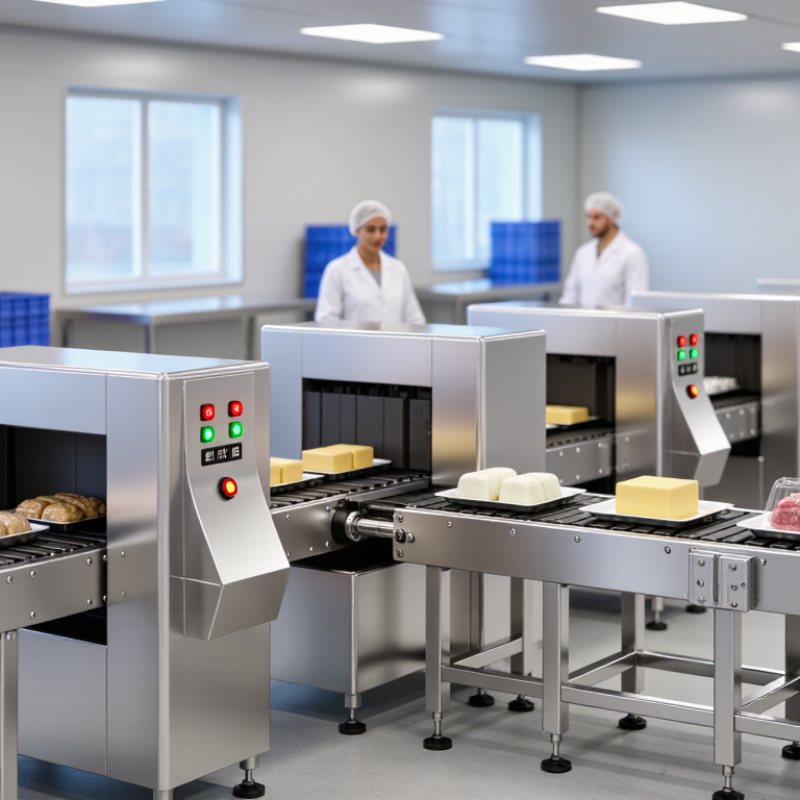
China’s food inspection metal detector industry serves bakeries, meat processors, snack factories, and frozen food plants. Manufacturers commonly develop tunnel, pipeline, and gravity-feed systems for different production conditions. Modern units detect ferrous, non-ferrous, and stainless-steel particles inside packaged or unpackaged products. Their performance depends on aperture size, product moisture, temperature, packaging material, and line speed.
In practice, no machine is perfect. Wet products may create a product-effect signal and reduce sensitivity. Experienced suppliers therefore test real samples before recommending equipment. They also examine reject mechanisms, stainless-steel construction, washdown protection, calibration records, and data traceability. Reliable systems should support routine verification and clear maintenance procedures. A factory may over-trust automatic inspection, though operator training remains essential. That weakness deserves honest attention.
Tips: Request tests using your actual product, packaging, and smallest expected contaminant. Check performance at normal and maximum line speeds. Ask for documented sensitivity results, verification intervals, service response, and training details. Avoid choosing equipment by price alone. A lower initial cost may bring more false rejects, downtime, or difficult cleaning. Also review whether the detector integrates smoothly with conveyors, checkweighers, and quality records. This practical comparison often reveals differences that brochures cannot show.
Reference detection test-piece diameters commonly used for food-processing validation. Actual sensitivity depends on product conductivity, moisture, temperature, packaging, aperture size, and equipment configuration.
Ferrous particles are generally easier to detect than non-ferrous and stainless-steel particles. Wet, conductive, pumped, or highly salted products normally require larger validation test pieces than dry products.
Selecting China’s top food inspection metal detector manufacturers requires more than comparing factory prices. A credible ranking should examine practical experience, engineering depth, and documented performance. Manufacturers with years of food-processing projects often understand wet products, dense packaging, and unstable production lines. Their equipment should detect ferrous, non-ferrous, and stainless-steel test pieces consistently.
Technical verification matters. Reviewers should inspect sensitivity trials using real products, not only empty test packs. A detector should maintain stable results beside conveyors, motors, and sealing machines. Stainless-steel construction, hygienic welds, and suitable protection ratings also deserve close attention. Ask for calibration records, factory acceptance procedures, and sample inspection reports. Clear answers matter.
After-sales support separates a capable supplier from a promising one. Check installation training, spare-part availability, remote assistance, and response times. The control system should store inspection records and show rejected-product events clearly. Documentation should be understandable to operators on a busy shift. Independent quality certifications can support trust, but certificates alone prove little. No ranking is perfect. A polished brochure may hide weak field support, while a smaller factory may offer stronger engineering attention. I would compare at least three production trials and contact recent users before assigning a final position. This process takes longer, but it reduces the risk of choosing equipment that performs well only during demonstrations.
China’s top 10 food inspection metal detector manufacturers are increasingly judged by measurable performance, not catalogue claims. MarketsandMarkets reported that the global food safety testing market could grow from about USD 24.6 billion in 2023 to USD 34.0 billion by 2028. This growth raises expectations for Chinese equipment suppliers serving processors, exporters, and inspection laboratories.
A practical comparison should examine detection sensitivity, aperture size, product effect control, and reject accuracy. The strongest Chinese manufacturers typically offer stainless-steel frames, IP65 or higher protection, multilingual interfaces, and traceable test records.
In production trials, operators should test dry snacks, frozen foods, meat products, and products with high moisture. Performance can change sharply between them. That detail matters.
Reports from Research and Markets also identify automation, digital traceability, and stricter quality controls as major food inspection trends. Leading Chinese suppliers are responding with conveyor integration, automatic calibration reminders, and data connections for factory management systems.
Still, “top ten” rankings are not absolute. Public specifications may omit installation conditions, belt speed, or product temperature. A careful buyer should request sample testing and service response evidence. My assessment would therefore combine laboratory sensitivity with field reliability, training quality, spare-parts access, and documented maintenance records. Not every impressive demo survives a busy production line.
Food metal detectors protect production lines from ferrous, non-ferrous, and stainless-steel fragments. Modern systems use balanced-coil technology, digital signal processing, and automatic product learning. These features help reduce false rejects caused by salt, moisture, or temperature changes. In practical factory testing, wet meat and packaged cheese often need different sensitivity settings. A stable conveyor, sealed housing, and clear calibration records also support reliable operation.
Compliance should begin with a documented HACCP plan and risk-based control points. Manufacturers should also understand ISO 22000, BRCGS, and IFS requirements when serving international food markets. These standards commonly expect validated detection limits, controlled test pieces, traceable records, and verified reject devices. Metal-free zones near the inspection head matter too. Small installation errors can weaken performance. That lesson is easy to overlook.
Tips: Test ferrous, non-ferrous, and stainless-steel samples at realistic speeds. Place them near the package center and edges. Record results after cleaning and product changeovers. Check alarms, reject timing, and belt alignment daily. Do not trust factory settings forever. Product effects can change.
China Top 10 Food Inspection Metal Detector Manufacturers
Choosing a metal detector manufacturer should begin with your product, not a ranking list. WHO estimates that contaminated food causes about 600 million illnesses and 420,000 deaths annually. That figure makes detection a risk-control decision, not a purchasing shortcut. Test samples using your actual product, including wet meat, salted foods, and wrapped bakery items. Moisture can reduce detection sensitivity.
Ask each manufacturer for validated performance data. Request sensitivity results for ferrous, non-ferrous, and stainless-steel test pieces. Check whether tests cover different temperatures, speeds, pack sizes, and product effects. A serious supplier should explain reject timing, calibration records, and false-rejection rates. Numbers matter.
Inspect the factory and service network carefully. Review quality certificates, traceability procedures, software controls, and technician training. Codex CXC 1-1969, revised in 2022, supports preventive controls and documented verification. FDA’s Preventive Controls framework also expects hazard-based monitoring and corrective action. The detector should connect with your existing inspection records. Ask for audit examples, response times, spare-part availability, and training after installation. “Fast delivery” is not enough.
Do not choose the cheapest quotation automatically. A lower purchase price may hide weak validation or expensive downtime. I would run a three-month trial when possible. It exposes problems that a factory demonstration may conceal. Perfect specifications on paper can still fail beside a real conveyor, during sanitation, or near electrical interference.
| No. | Selection Dimension | Why It Matters | Documents or Tests to Request | |
|---|---|---|---|---|
| 1 | Food-Safety Compliance | Equipment design should support HACCP-based controls and applicable food-contact requirements. Manufacturing systems commonly reference ISO 9001, ISO 22000, BRCGS, or equivalent food-safety procedures. | Compliance documentation helps reduce audit risk and supports traceability throughout the inspection process. | Quality certificates, material declarations, food-contact documentation, factory audit reports, and calibration procedures. |
| 2 | Detection Sensitivity | Sensitivity must be specified separately for ferrous, non-ferrous, and stainless-steel test pieces. The achievable size depends on aperture height, product effect, speed, orientation, and package type. | A single sensitivity figure is not meaningful unless it is linked to a defined product, aperture, and operating condition. | Factory acceptance test, product-specific sensitivity results, and certified test-piece records for each product SKU. |
| 3 | Product-Effect Compensation | The detector should provide automatic or manual product learning for wet, salty, conductive, frozen, or high-moisture foods. | Moisture and salt can create electrical signals that resemble metal contamination and may increase false rejects. | Demonstration using the actual product, product-learning procedure, stability results, and false-reject statistics. |
| 4 | Hygienic Construction | Look for stainless-steel construction, sloped surfaces, minimal dirt traps, sealed conveyors, and hygienic access to inspection and reject areas. | A hygienic design makes cleaning easier and reduces the risk of microbial contamination and corrosion. | Equipment drawings, stainless-steel grade information, hygienic-design checklist, and cleaning validation guidance. |
| 5 | Ingress Protection | IP65 is generally suitable for protection against dust and low-pressure water jets. IP66 or IP69K may be considered for more demanding washdown environments, subject to the complete machine configuration. | The correct protection level improves reliability during routine cleaning and high-pressure washdown. | IP test certificate, washdown instructions, enclosure ratings for sensors and controls, and written warranty conditions. |
| 6 | Reject-System Reliability | Available systems may include air blast, pusher, drop-flap, retracting-band, or stop-and-alarm configurations. The selection depends on product weight, package format, line speed, and spacing. | A reliable reject system must remove contaminated products without damaging good products or interrupting production. | Reject validation report, reject confirmation sensor, fail-safe test, catch-bin monitoring, and line-speed calculation. |
| 7 | Line Integration | The machine should support suitable conveyor dimensions, product spacing, speed ranges, electrical interfaces, and communication protocols required by the existing production line. | Good integration prevents bottlenecks and reduces modifications to upstream and downstream equipment. | General arrangement drawings, electrical diagrams, interface list, conveyor-load data, and site-acceptance test plan. |
| 8 | Data Logging and Traceability | Useful functions include event logs, user access control, product recipes, test records, alarm history, date and time stamps, and exportable production data. | Electronic records support investigations, internal quality reviews, customer complaints, and third-party audits. | Software demonstration, sample reports, data-retention policy, user-permission matrix, and network-security information. |
| 9 | Validation and Calibration Support | The manufacturer should provide installation qualification, operational qualification, performance testing, routine test procedures, and calibration or verification intervals. | Regular verification demonstrates that the detector continues to operate at the approved critical control limit. | IQ/OQ/PQ templates, test-piece certificates, calibration records, preventive-maintenance schedule, and validation protocol. |
| 10 | After-Sales Service and Total Cost | Evaluate commissioning, spare-parts availability, remote support, technician response time, operator training, warranty coverage, and expected maintenance costs. | The purchase price is only one part of ownership cost; downtime and delayed technical support can be more expensive than the equipment itself. | Service-level agreement, spare-parts list, warranty terms, training plan, response-time commitment, and five-year cost estimate. |
(Your form has been submitted.)
We'll be in touch soon! Until then, take a look around — you never know what you'll find!