Top Food Flavoring Extracts You Need to Try for Delicious Recipes?
Exploring the world of food flavoring extracts allows you to elevate your culinary creations. Imagine adding a drop of almond extract to your baked goods or a splash of vanilla in your morning coffee. These simple additions can transform your dishes and awaken your taste buds.
Food flavoring extracts are versatile and easy to use. Whether you are baking cookies or preparing savory sauces, these extracts enhance flavors in remarkable ways. However, not all extracts are created equal. Some may contain artificial ingredients, which can impact taste. Reading labels is crucial.
Trying different food flavoring extracts opens a door to creativity. Perhaps you’ll discover a newfound love for hazelnut flavoring in your desserts. Yet, experimentation requires caution. Not every combination will delight your palate. It’s a journey worth taking, filled with both successes and lessons.
Essential Flavoring Extracts for Elevating Your Culinary Creations
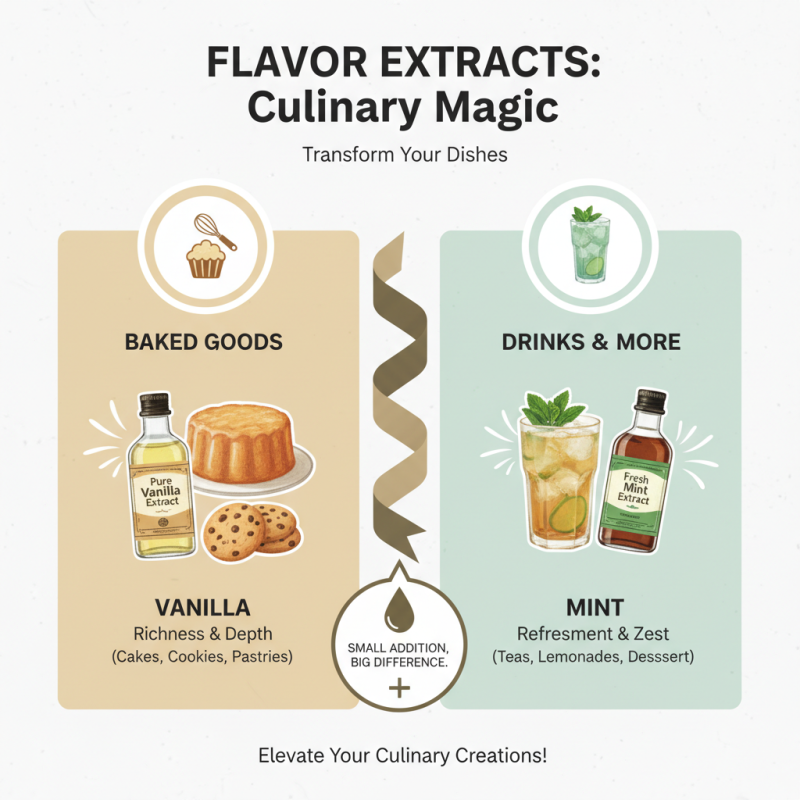
Flavoring extracts can truly transform your dishes. They add depth and complexity. Imagine a rich vanilla extract enhancing your baked goods. Or mint extract revitalizing a summer drink. These small additions make a big difference.
Try almond extract in pastries. It provides a delightful twist. For savory dishes, look at herb extracts. Basil or oregano can elevate a simple pasta sauce. These flavors can be intense. Use a small amount and taste as you go. It’s better to add more later.
Don’t forget citrus extracts. Lemon or orange can brighten up desserts. But, be careful with the amount. Too much can overpower other flavors. Experimenting is essential, but it can also be tricky. Every kitchen deserves a selection of extracts. Keep your favorites handy and enjoy creating!
Popular Vanilla Extract Varieties and Their Unique Flavor Profiles
When it comes to flavoring extracts, vanilla stands out. This ingredient has a unique ability to enhance both sweet and savory dishes. According to market research, vanilla extract is the most popular flavoring, accounting for over 30% of the global flavoring market. Yet, not all vanilla extracts are created equal. Each type offers distinct taste profiles.
Madagascar vanilla is rich and creamy, perfect for desserts. On the other hand, Tahitian vanilla presents fruity notes, ideal for lighter recipes. Mexican vanilla, with its spicy undertones, adds warmth to baked goods. Each variety has its fans and culinary uses. Understanding these nuances can elevate your culinary creations.
Tip: To ensure maximum flavor, use pure vanilla extract rather than imitation. The difference in quality is noticeable. Another tip is to add a splash of vanilla to savory dishes, like marinades. It may seem unconventional, but it can enhance depth. Experimentation often leads to delicious surprises. Remember, not all combinations will hit the mark, and that’s part of the learning process. Enjoy the journey of flavors.
Top Food Flavoring Extracts You Need to Try for Delicious Recipes
| Extract Type |
Flavor Profile |
Common Uses |
Aroma |
| Vanilla Extract |
Sweet, creamy, and warm |
Baking, desserts, beverages |
Rich and comforting |
| Almond Extract |
Nutty, slightly sweet |
Cookies, marzipan, frostings |
Warm and inviting |
| Mint Extract |
Fresh, cooling, and revitalizing |
Chocolate, desserts, drinks |
Crisp and refreshing |
| Lemon Extract |
Citrusy, bright, and zesty |
Cakes, marinades, dressings |
Uplifting and tangy |
| Coconut Extract |
Sweet, creamy, and tropical |
Baking, smoothies, tropical dishes |
Warm and exotic |
The Versatility of Nut Extracts: From Almonds to Hazelnuts
Nut extracts offer a unique way to enhance your culinary creations. Almond, hazelnut, and walnut extracts can transform everyday dishes. A few drops can elevate cookies, cakes, or even savory dishes. Imagine adding a hint of hazelnut to your morning coffee or a splash of almond extract to your favorite pancake batter. It’s all about exploration.
Each nut has its own character. Almond extract is light and sweet, perfect for pastries. Hazelnut extract brings warmth and depth, ideal for chocolate treats. However, using too much can overwhelm the dish. Balancing flavors is key. Experimentation is essential. Sometimes a recipe may not work out as expected. That’s okay. It’s part of the culinary journey.
Don’t be afraid to mix these extracts. Combine almond and hazelnut in a dessert for a richer flavor profile. Try adding a few drops to sauces for a hint of nuttiness. The possibilities are endless, and versatility is the essence of nut extracts. Each time you cook, you learn and grow. Every dish tells a story. Embrace the imperfect results. They lead to new discoveries.
Herbal and Spice Extracts: Adding Depth to Savory Dishes
Herbal and spice extracts have gained popularity for enhancing savory dishes. According to industry data, the global market for flavoring extracts is projected to reach over $3.2 billion by 2027. This growth is driven by a desire for natural ingredients among consumers. Extracts like basil, thyme, and rosemary provide rich flavors without the need for artificial additives.
In a recent survey, 70% of chefs reported using herb extracts in their recipes. These extracts add complexity to dishes, elevating simple ingredients to gourmet levels. For instance, a few drops of thyme oil can transform a standard roast chicken into a culinary delight. However, not all extracts are created equal. Sourcing quality extracts is essential to avoid overpowering flavors.
Balancing herb extracts can be challenging. Too much can overshadow the dish, while too little may lead to blandness. A mere hint of oregano can brighten a tomato sauce, but it requires careful measurement. Many cooks find this balance difficult, leading to inconsistencies. Experimentation is key to mastering herbal flavoring in savory dishes. Use extracts thoughtfully, and the outcomes can be extraordinary.
 Blog
Blog