Top Organic Vanilla Extract Suppliers for Global Buyers

Sourcing reliable organic vanilla extract requires more than comparing prices on a supplier website. Global buyers must examine origin, extraction methods, certification records, and shipment consistency. Vanilla beans may come from Madagascar, Indonesia, Uganda, or other producing regions, and each origin can create different flavor notes. Some extracts show warm cocoa tones, while others deliver floral or woody aromas.

This guide introduces leading organic vanilla extract suppliers for international buyers. It focuses on practical evidence, not attractive claims alone. Important details include organic certification, traceability documents, allergen statements, batch testing, and clear product specifications. A dependable supplier should explain the vanilla species, alcohol or glycerin base, concentration, and recommended storage conditions.

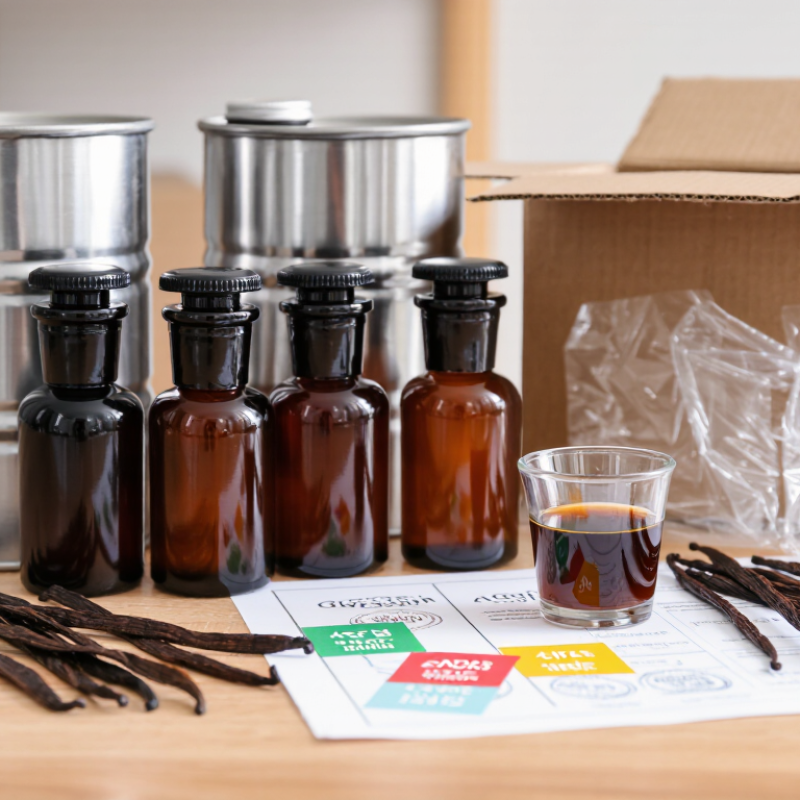
Packaging also matters. Dark glass bottles, sealed drums, and food-grade containers can protect the extract from light, heat, and contamination. Buyers should ask how suppliers manage customs paperwork, lead times, minimum order quantities, and damaged shipments. A small sample can reveal more than a polished brochure. Test the aroma, color, viscosity, and performance in your actual recipe.

No supplier is perfect. Seasonal shortages, harvest variation, and transport delays can affect even experienced exporters. Some certifications may also require careful verification in the buyer’s market. For that reason, this overview treats supplier selection as an ongoing quality process. It combines technical review, communication, and cautious sampling. The strongest partnerships usually grow through transparent records, responsive support, and consistent organic vanilla extract delivered at the promised standard.
Top Organic Vanilla Extract Suppliers for Global Buyers

Organic Vanilla Extract Defined: FDA’s 35% Alcohol and 13.35-oz Standard

For global buyers, “organic vanilla extract” should mean more than an organic certificate. In the United States, vanilla extract follows a specific FDA standard of identity. It must contain at least 35% alcohol by volume. This alcohol helps extract and preserve aromatic compounds from cured vanilla beans. It also supports a stable flavor during storage and shipment.

The standard includes a measurable vanilla requirement. Each gallon must contain vanilla constituents equivalent to those extracted from 13.35 ounces of vanilla beans. This figure is not a casual recipe guide. It helps buyers compare concentration across suppliers. A supplier should explain the extraction ratio, bean condition, alcohol source, and batch volume clearly.

Check the certificate of analysis. Confirm alcohol strength, organic status, microbiological results, and lot identification. The label should also match the product specification. For international orders, the U.S. FDA benchmark may not satisfy every destination market. Local rules can differ. That detail is easy to miss.

I would also request a retained sample. A warm, dark storage test can reveal flavor changes before a large shipment leaves the warehouse. Aroma matters. So does consistency.

One concern remains. Some documents use “pure,” “natural,” and “organic” loosely. These terms are not interchangeable. Buyers should review the actual formula, not only the marketing language. A careful review may feel slow, but unclear specifications create expensive surprises.

Global Origin Data: Madagascar Supplies About 80% of the World’s Vanilla

Top Organic Vanilla Extract Suppliers for Global Buyers

Madagascar supplies about 80% of the world’s vanilla, according to widely cited industry estimates. Its humid northeast region provides warm soil, steady rainfall, and shade suited to vanilla orchids. Many organic vanilla extract suppliers source beans from this area because the flavor is rich, creamy, and slightly raisiny. However, origin alone does not prove quality. Buyers should verify harvest records, organic certification, moisture levels, and extraction methods.

In practical sourcing, I would request a sample before discussing large volumes. The sample should show a clean aroma, deep brown color, and no burnt or artificial notes. Ask for the botanical name, bean origin, batch number, and certificate details. Traceability matters when supply conditions change. Madagascar’s harvest can face cyclones, labor shortages, and price swings. Estimates also vary by season, so the 80% figure should be treated as a strong guide, not an exact annual measurement. That is worth remembering.

Tips: Compare samples from different harvest periods. Check whether the extract uses organic alcohol or another approved carrier. Confirm the vanillin content, packaging seal, shelf-life data, and storage temperature. A dependable supplier should answer clearly and provide consistent documents. If answers remain vague, pause the order. Small delays are cheaper than receiving weak extract.

Organic Supplier Verification: USDA, EU Organic, HACCP, and ISO 22000

For global vanilla buyers, organic verification should begin with the certificate, not the sales brochure. The FiBL and IFOAM Organics International 2024 report recorded 98.9 million hectares under organic management worldwide in 2022. This growth increases sourcing opportunities, but it also demands sharper document checks. A supplier should provide a current USDA Organic certificate for United States shipments, or an EU Organic certificate for European trade. Check the certified operator, facility address, product scope, and certificate expiry date. Small details matter.

HACCP confirms that the supplier identifies biological, chemical, and physical hazards across harvesting, curing, extraction, and packing. ISO 22000 adds a structured food-safety management system, including traceability, internal audits, and corrective actions. However, certification alone is not complete proof. A certificate may cover one facility, while the actual vanilla originates elsewhere. Request recent audit findings, batch records, pesticide test results, and a sample traceability exercise. The Global Food Safety Initiative’s benchmarking approach also supports stronger supplier evaluation, although buyers should not treat one audit as permanent assurance.

Tips: Ask for the lot code before ordering. Match it with the organic certificate, country of origin, production date, and laboratory report. Confirm whether the laboratory uses validated methods. Visit the facility when volumes justify the cost. Remote review is useful, but imperfect. That weakness deserves attention.

This chart maps the primary verification scope of widely used organic and food-safety standards. A value of 1 indicates that the standard directly addresses the listed area; it is not a supplier performance score or market-share measurement.

Quality Testing Benchmarks: Vanillin, Coumarin, Microbial Safety, and Traceability

For global buyers, vanilla extract quality begins with measurable identity, not attractive aroma alone. HPLC testing should quantify vanillin and related compounds against a validated reference method. Natural variation is substantial. Origin, curing time, extraction ratio, and storage can all shift results. The USP Food Chemicals Codex and AOAC Official Methods provide useful frameworks, but neither replaces a buyer-specific specification. A single number is not enough.

Coumarin deserves separate attention. Organic certification does not mean coumarin-free. Laboratories should use validated LC-MS or HPLC methods, with a stated limit of quantification. The FAO/WHO JECFA evaluation established a tolerable daily intake of 0.1 mg per kilogram of body weight. Destination-market requirements still vary. Ask for actual batch results, not a generic compliance letter. Small detail, large consequence.

Microbial release testing should cover aerobic plate count, yeast, mold, coliforms, and pathogens where risk assessment requires them. ISO 4833-1, ISO 21527, and the FDA Bacteriological Analytical Manual offer recognized testing approaches. Limits should be written into the purchase contract. “Pass” is too vague. Traceability should follow ISO 22005 principles, linking lot code, farm region, curing dates, extraction batch, solvent, and warehouse conditions. Organic certificates and transaction records should match those identifiers. In practice, paperwork can lag physical stock. That weakness deserves an audit, not an assumption.

Buyer Comparison Metrics: MOQ, Lead Time, 1× Strength, and Cost per Kilogram

Top Organic Vanilla Extract Suppliers for Global Buyers

Global buyers should compare organic vanilla extract suppliers using four measurable fields: MOQ, lead time, 1× strength, and cost per kilogram. MOQ affects cash flow and storage space. Ask whether it applies per flavor, batch, or shipment. A 25-kilogram drum may suit a large factory but burden a small beverage producer. Confirm packaging, shelf life, and minimum reorder quantity in writing. Small details matter.

Lead time needs two figures: production time and transit time. Request recent batch dates, not only optimistic estimates. For 1× strength, confirm the supplier’s concentration standard and testing method. Some suppliers describe strength through vanilla solids, while others use internal terminology. Compare like with like. Do not guess. Ask for a specification sheet, certificate of analysis, and a retained sample from the quoted batch.

Cost per kilogram should include packaging, documentation, testing, freight, and applicable delivery terms. A low unit price can become expensive after air transport or special handling. Experienced purchasing teams also review organic certification status, lot traceability, and response time when a specification changes. One practical test is simple: send the same inquiry to each supplier and compare the clarity of every reply. The first quote can mislead. Forecasts can fail, especially before seasonal harvest changes. Leave a modest supply buffer, then review actual delivery records after each order.

Top Organic Vanilla Extract Suppliers for Global Buyers - Buyer Comparison Metrics: MOQ, Lead Time, 1× Strength, and Cost per Kilogram
Supplier Profile Primary Supply Region Typical Organic Documentation Product Format MOQ Typical Lead Time 1× Strength Specification Indicative Cost per Kilogram Best Fit for Buyers
Large-scale organic ingredient processor United States / Europe Organic certificate, HACCP or GFSI-recognized food-safety system, certificate of analysis Bulk liquid vanilla extract 100–250 kg 4–8 weeks Minimum 1×; commonly standardized to approximately 10% vanilla-solids content US$85–140/kg Industrial beverage, dairy, bakery, and confectionery production
Origin-focused organic extractor Madagascar Organic certification, traceability to curing lots, allergen statement, certificate of analysis Single-origin liquid extract 25–100 kg 6–12 weeks 1× extract; strength and vanillin level should be confirmed by batch specification US$110–190/kg Premium clean-label products requiring origin traceability
Private-label organic flavor manufacturer United States / Canada Organic certificate, FDA-compliant documentation, technical data sheet, certificate of analysis Liquid extract in drums, pails, or retail-ready packaging 50–200 kg 5–10 weeks 1×; may be adjusted for flavor intensity according to the buyer's formula US$95–175/kg Retail brands and contract manufacturers needing custom packaging
European organic flavor house European Union EU organic certification, HACCP or FSSC 22000 documentation, product specification, allergen declaration Organic vanilla extract for food and beverage applications 25–100 kg 4–9 weeks 1×; typically supplied with defined density, alcohol content, and vanilla-solids specification US$120–210/kg European buyers prioritizing regulatory support and shorter regional logistics
Bulk natural-extract exporter India / Southeast Asia Organic certificate where applicable, export documents, certificate of analysis, microbiological report Bulk liquid extract and food-service packaging 100–500 kg 7–14 weeks 1×; buyers should verify actual vanilla-solids content rather than relying only on the strength label US$70–125/kg Cost-sensitive buyers with larger purchase volumes
Small-batch organic specialty producer United States / Europe Organic certificate, batch traceability, certificate of analysis, sustainability statement Small-batch liquid extract 10–50 kg 3–8 weeks 1×; batch-to-batch sensory variation may be higher than with standardized industrial extracts US$150–280/kg Specialty food, premium bakery, and limited-release product lines
Certified-organic contract extractor Mexico / Central America Organic certificate, HACCP plan, origin documentation, certificate of analysis, export compliance file Custom liquid extract and co-branded bulk supply 50–250 kg 6–12 weeks 1×; custom concentration and alcohol-free options may be available by formulation US$90–165/kg North American buyers seeking regional sourcing and product customization

Cost figures are indicative bulk-market ranges in USD per kilogram for organic 1× liquid vanilla extract. Actual quotations vary with vanilla origin, crop year, organic certification, alcohol content, packaging, order volume, freight terms, duties, and agreed quality specifications. MOQ and lead time should be confirmed directly against the supplier’s current quotation and certificate of analysis.

Partners in
Sustainability

Learn More
National Forest Foundation
Upcycled Food