What Is Freeze Dried Chicken Cat Treats Used For?
Freeze Dried Chicken Cat Treats are used mainly as high-value rewards, meal toppers, training aids, and appetite enhancers. Their crisp texture and concentrated chicken flavor can attract cats that ignore ordinary biscuits. Many owners also crumble them over wet food, creating extra aroma without changing the main feeding routine. Practical experience matters here. A cat may accept one brand eagerly and reject another because of texture, smell, or processing differences.
The American Pet Products Association’s 2024 State of the Industry report valued U.S. pet-industry sales at approximately $152 billion. However, public reports rarely isolate freeze-dried chicken cat treats as a separate category. That gap matters. Market growth does not prove that every treat suits every cat. Dr. Cailin Heinze, a board-certified veterinary nutrition specialist, states, “Treats should make up no more than 10% of a pet’s daily calorie intake.” This guidance helps explain their proper use: enrichment, bonding, and occasional nutrition support—not a replacement for complete cat food.
Owners should check calories, ingredients, storage instructions, and feeding claims. Single-protein recipes may be useful for limited-ingredient preferences, but they are not automatically hypoallergenic. Freeze-drying also does not make raw poultry risk-free. Hygiene still matters, especially around children, older adults, and immunocompromised family members. The honest answer is less glamorous: these treats can be convenient and motivating, yet portion control remains essential. Cats may ask for more. That does not mean they need more.
What Are Freeze-Dried Chicken Cat Treats?
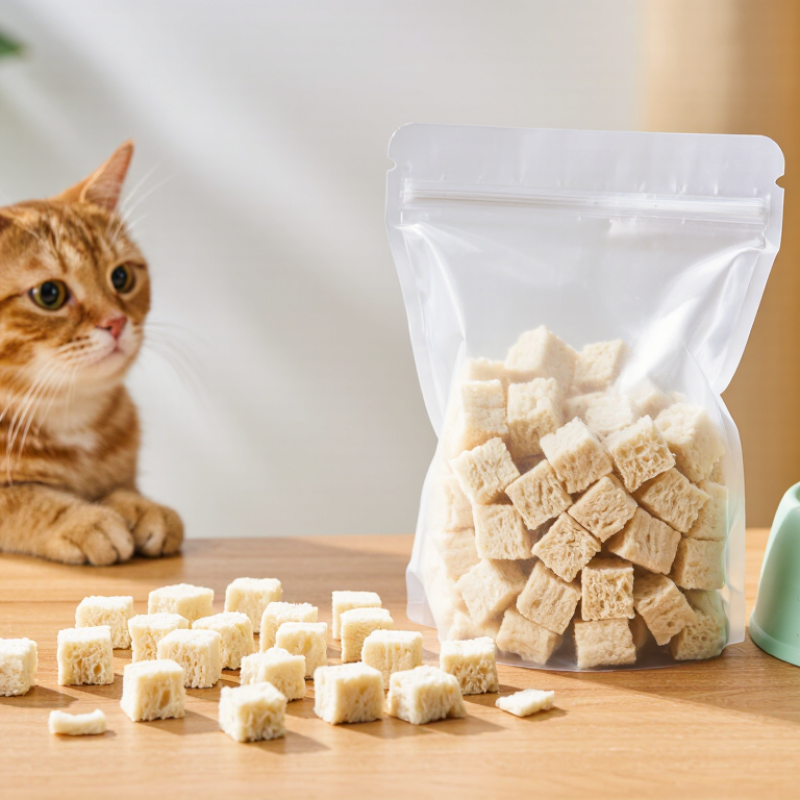
Freeze-dried chicken cat treats are small pieces of chicken preserved by removing moisture through freezing and vacuum drying. This process keeps most of the meat’s original aroma, shape, and protein content without adding water during production. The result is usually light, crisp, and easy to break into smaller bites.
Many cats enjoy the strong chicken smell. A piece may work as a reward during gentle training, a topper for regular food, or an occasional appetite stimulant. Check the ingredient list carefully. A simple product should identify chicken clearly and avoid unnecessary sweeteners, seasonings, or excessive additives. Treats should not replace a complete, balanced feline diet.
The texture can be surprisingly hard. Some cats crunch it immediately, while others need smaller crumbs or softened pieces. My practical concern is hydration: freeze-dried food contains very little water, so fresh drinking water should always be available. Treat portions also matter, even when the ingredients look wholesome. A useful guideline is keeping treats near ten percent of daily calories, while adjusting for the cat’s size and health. Cats with kidney disease, food allergies, or sensitive digestion may need veterinary advice first. Some cats simply dislike the texture. That is normal.
What Are Freeze-Dried Chicken Cat Treats Used For?
Freeze-dried chicken cat treats are mainly used as rewards, training aids, and appetite boosters. Their strong meat aroma can attract cats that ignore ordinary snacks. A small piece may encourage a shy cat to enter a carrier or accept gentle handling. During clicker training, break each treat into tiny portions. This helps control calories while keeping the reward meaningful. My practical rule is simple: the treat should support behavior, not replace a balanced diet.
Some owners crumble these treats over wet food when a cat becomes selective. Others rehydrate them with a little clean water, creating a softer bite for older cats or cats with dental discomfort. Always check the package directions, because not every product is designed for rehydration. These treats are complementary foods, not complete meals. A veterinarian can help adjust portions for overweight cats, kittens, or animals with kidney problems. The right amount may be smaller than expected.
Safety deserves attention. Freeze-drying removes moisture, but it may not eliminate every harmful microorganism unless the product received a validated safety treatment. Wash your hands after handling treats, and store them in a cool, dry place. Discard pieces that smell unusual or become damp. Watch for vomiting, diarrhea, itching, or reduced appetite after introducing chicken. A common mistake is offering too many because each piece feels light. It still counts. Keep fresh water available, and introduce new treats gradually.
What Nutritional Benefits Do They Provide for Cats?
Freeze-dried chicken cat treats are mainly used as high-protein rewards, training aids, or meal toppers. Removing water concentrates the ingredients, rather than creating extra nutrients. USDA FoodData Central lists roasted chicken breast at about 31 grams of protein per 100 grams. Freeze-dried chicken can appear even richer by weight, but its label matters more than a general food database.
Protein supports muscle maintenance, tissue repair, and normal body function in cats. Chicken also supplies amino acids and some natural minerals. Yet these treats are not automatically complete cat food. AAFCO nutritional profiles are designed for complete diets, while many treats provide only selected nutrients. The difference matters.
WSAVA’s Global Nutrition Toolkit recommends keeping treats below 10% of a cat’s daily calories. A small cube may look harmless. Several cubes can quietly add substantial energy. Freeze-drying also does not guarantee pathogen removal, especially when products contain raw poultry. Clean storage and careful handwashing remain sensible practices. In practical feeding, I would choose treats with clear calorie information and limited ingredients. Cats with kidney disease, food allergies, or weight problems need individual veterinary guidance. I would not describe every freeze-dried chicken treat as “healthy.” Some are useful. Some are simply concentrated calories. USDA FoodData Central and WSAVA guidance offer helpful reference points, but the package analysis and the cat’s total diet deserve closer attention.
 Blog