China’s natural food flavorings industry has grown from small ingredient workshops into a sophisticated supply network. Today, manufacturers serve beverage, bakery, dairy, confectionery, and savory food producers worldwide. This guide introduces ten notable Chinese suppliers and examines what makes each one worth considering.
The evaluation focuses on traceable raw materials, extraction methods, flavor consistency, food safety systems, and export experience. It also considers whether suppliers can provide technical support, documentation, samples, and stable batch performance. A citrus flavor should smell fresh when opened, not sharp or artificial. A vanilla note should remain recognizable after heating, mixing, and storage.
Quality matters most.
Reliable suppliers usually maintain controlled production areas and documented testing procedures. Certifications may include ISO, HACCP, GMP, or other recognized standards, depending on the market served. However, certificates alone cannot prove practical performance. Buyers should request current specifications, allergen statements, shelf-life data, and independent test reports.
No ranking can remain permanently accurate. Product quality, capacity, pricing, and service may change during a single business year. Some suppliers excel at custom formulas but offer limited inventory. Others provide consistent large-volume production but less flexibility for small orders. That difference is easy to miss.
For this reason, the following overview treats natural food flavorings suppliers as potential partners, not simply names on a list. It encourages careful sampling, factory communication, and regulatory review before purchase. The strongest choice depends on the product, target market, and required level of customization. Practical verification remains essential.

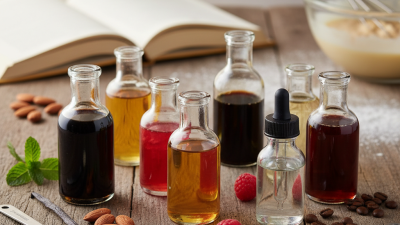
Natural food flavorings are flavor compounds obtained from edible sources such as fruits, herbs, spices, vegetables, and fermentation products. They can appear as extracts, essential oils, distillates, or concentrated preparations. Their purpose is to improve aroma and taste while supporting a cleaner ingredient profile.
In practical formulation work, source quality matters greatly. Citrus oils may add bright top notes, while vanilla, cocoa, or roasted grain extracts create warmer depth. Natural flavorings can help replace inconsistent seasonal ingredients and maintain a familiar taste during production. They may also support reduced-sugar recipes by making sweetness feel stronger. Still, “natural” does not mean automatically healthier, stronger, or allergen-free. That assumption fails sometimes. Processing, dosage, storage, and labeling requirements still need careful review.
Tips: Ask suppliers for source details, specification sheets, allergen statements, and batch testing information. Check how the flavor performs in your exact product, not only in water. Heat, acidity, fat, and packaging can change its character. A sample may smell excellent at room temperature but fade after baking. For Chinese suppliers, evaluate technical support, traceability, delivery consistency, and communication speed. Request pilot samples from several qualified manufacturers before choosing a long-term partner. Keep sensory notes specific, such as “green citrus at opening” or “weak roasted finish after two weeks.” Sensory judgment can be subjective, so use trained panels and simple stability records whenever possible.

China’s natural food flavorings supply chain begins close to farms. Citrus peel, tea, herbs, spices, and other crops move from growers to drying, extraction, and flavor-processing facilities. The USDA Foreign Agricultural Service’s 2024 China Citrus Annual estimates China’s citrus production at roughly 67 million metric tons. That scale creates a substantial source of peel, but harvest volume alone does not guarantee consistent aroma or quality.
Processing depends on careful sorting and timely handling. Fresh peel can lose volatile aroma compounds if it sits too long in warm, humid conditions. Extraction methods, moisture control, and batch testing help suppliers maintain a more stable profile. Still, natural ingredients vary with weather, cultivar, and harvest timing. A specification sheet cannot tell the whole story.
For buyers, traceability matters as much as sample quality. Ask suppliers to identify the crop origin, processing site, and relevant batch records, then compare samples across seasons. China’s large agricultural base supports a broad raw-material network, yet that network can be uneven. USDA production estimates describe crop scale, not the quantity suitable for flavor extraction. That distinction is easy to overlook.
Evaluating China’s natural flavoring suppliers requires more than comparing quotations. Grand View Research estimated the global natural flavors market at about USD 8 billion in 2023, with continued growth through 2030. This expansion attracts capable producers and inexperienced traders. Request the factory address, legal manufacturing scope, and recent audit records. A reliable supplier should explain its extraction, blending, and storage processes clearly.
Verify certifications independently. ISO 22000 or FSSC 22000 can support food-safety controls, but certificates alone prove little. Ask for HACCP plans, allergen statements, pesticide screening, heavy-metal results, and batch-specific certificates of analysis. Check whether laboratories hold ISO/IEC 17025 accreditation. The China National Accreditation Service provides a useful reference for laboratory credibility. Traceability should reach the raw material lot, not merely the shipping carton.
Sample testing matters. Compare aroma strength, solubility, color stability, and performance after heating. Ask for three production batches, not one carefully selected sample. Review change-control procedures for suppliers, formulas, and processing temperatures. Small details reveal operational maturity. Still, documentation can be incomplete or outdated. I have seen promising samples fail during scale-up because the pilot formula used different carriers. Require a written specification, retention samples, and a defined complaint response period before signing a long-term agreement.
| No. | Evaluation Dimension | What to Assess | Evidence to Request | Why It Matters |
|---|---|---|---|---|
| 1 | Regulatory Compliance | Whether the supplier can explain the applicable food flavoring requirements for the product and intended market. | Product specifications, regulatory statements, ingredient declarations, and export-market documentation where applicable. | Requirements differ by product category and destination market; documentation helps confirm suitability before purchase. |
| 2 | Ingredient Traceability | How ingredients are identified and traced through sourcing, production, and finished-product batches. | Batch records, supplier qualification procedures, and traceability or recall procedures. | Traceability supports investigations and targeted action if a quality or safety concern arises. |
| 3 | Natural-Status Documentation | How the supplier substantiates descriptions such as “natural” for each flavor and market. | Ingredient breakdown, processing information, and a written explanation of the applicable labeling basis. | “Natural” labeling rules and interpretations can vary by jurisdiction and product context. |
| 4 | Quality Management | Whether documented controls cover incoming materials, production, testing, and release of finished products. | Quality-system overview, audit information, and relevant certificates with valid scope and dates. | A documented quality system helps make product consistency and corrective action more manageable. |
| 5 | Food Safety Controls | How the supplier identifies and manages food-safety hazards relevant to its operations and products. | Food-safety plan or overview, hazard-control procedures, and applicable audit records. | Food-safety controls are essential when selecting ingredients for food manufacturing. |
| 6 | Product Specifications | Whether specifications clearly define the flavor’s form, intended use, storage conditions, and key quality parameters. | Current technical data sheet, certificate of analysis format, and sample label or packaging details. | Clear specifications help buyers compare products and set measurable acceptance criteria. |
| 7 | Consistency and Batch Testing | How the supplier checks that batches meet agreed specifications and controls changes in sensory characteristics. | Representative batch certificates, testing methods, and change-control procedures. | Flavor variation can affect the taste and performance of finished foods. |
| 8 | Application Support | Whether technical staff can advise on dosage trials, processing conditions, and compatibility with the intended food matrix. | Technical-support scope, sample-testing process, and application guidance relevant to the product. | Flavor performance can depend on formulation, processing, storage, and the finished product. |
| 9 | Supply Reliability | Whether the supplier can communicate production capacity, lead times, minimum order quantities, and continuity planning. | Written lead-time and ordering terms, capacity information, and business-continuity arrangements. | Reliable planning helps reduce the risk of interruptions to ingredient supply. |
| 10 | Commercial Transparency | Whether quotations clearly state product grade, packaging, pricing basis, delivery terms, and any additional charges. | Formal quotation, sample terms, payment terms, and written procedures for complaints and returns. | Transparent terms make supplier comparisons clearer and help prevent misunderstandings. |
Use these criteria to shortlist and compare suppliers. Confirm all certificates, claims, specifications, and regulatory documents directly with each supplier and against the requirements of the intended market.
China’s Top 10 Natural Food Flavorings Suppliers
China’s top 10 natural food flavorings suppliers should be judged by evidence, not promotional claims. A practical review examines botanical sourcing, extraction controls, sensory stability, and batch traceability. It also checks compliance with China’s GB 2760 food additive standard. Supplier laboratories should provide specification sheets, allergen statements, and recent testing records.
MarketsandMarkets estimates the global natural flavors market could grow from about USD 7.7 billion in 2024 to USD 10.2 billion by 2029. This growth reflects demand for fruit, spice, herb, and tea profiles with recognizable origins. China’s manufacturing strength supports flexible formats, including water-soluble liquids, emulsions, and spray-dried powders. However, a limitation remains: public reports rarely separate natural flavor sales from synthetic categories. Therefore, a “top 10” list is better treated as a screening framework, not an official ranking.
Tips: Request three production batches, not one sample. Compare aroma after heating, dilution, and storage. Ask whether the supplier can trace raw materials to a defined region. Review technical files against Codex guidance and local requirements. Small details matter. A pleasant first smell may fade quickly in yogurt, baked goods, or beverages. Pilot testing is essential, yet many buyers still skip it. That is an avoidable mistake. Suppliers with experienced application teams can adjust dosage, carrier systems, and stability targets without hiding weaknesses behind attractive tasting notes.
This chart presents a supplier-evaluation framework for China’s natural food flavoring industry. The weighted criteria reflect commonly used procurement considerations, including product variety, traceability, regulatory compliance, technical support, customization, production capacity, and export readiness. The percentages represent evaluation weights rather than company-specific data.
When evaluating China’s top natural food flavoring suppliers, product application should guide the shortlist. Citrus oils suit beverages, while vanilla, cocoa, and fruit extracts support bakery and dairy recipes. Savory blends may require heat stability, low moisture, and strong batch consistency. Ask for dosage guidance, solubility data, storage conditions, and samples tested in your actual formula.
Quality evidence matters more than attractive catalogs. Reliable suppliers should provide a clear certificate of analysis, allergen statements, microbiological results, and traceability records. Certifications such as HACCP, GMP, ISO 22000, or FSSC 22000 can strengthen confidence, but certificates require verification. Natural flavor definitions also differ between markets. A product accepted in one country may need reformulation elsewhere.
Export planning often determines the real cost. Confirm ingredient declarations, shelf life, packaging size, HS classification, and destination labeling rules before placing an order. Request sealed samples and compare aroma after transport, not only on the first day. I have found that small differences in heat exposure can change fruit notes noticeably. That part is easy to underestimate. Some suppliers communicate quickly but document slowly, which creates avoidable delays. A practical scorecard should assess application performance, quality records, response time, export experience, and corrective-action procedures. Even strong suppliers need ongoing review.
(Your form has been submitted.)
We'll be in touch soon! Until then, take a look around — you never know what you'll find!